Every state should have a Legislative Council, even at extra expense: Saleem Ahmed
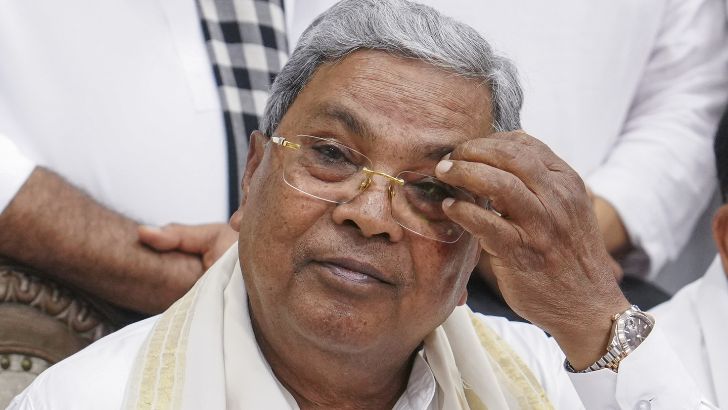
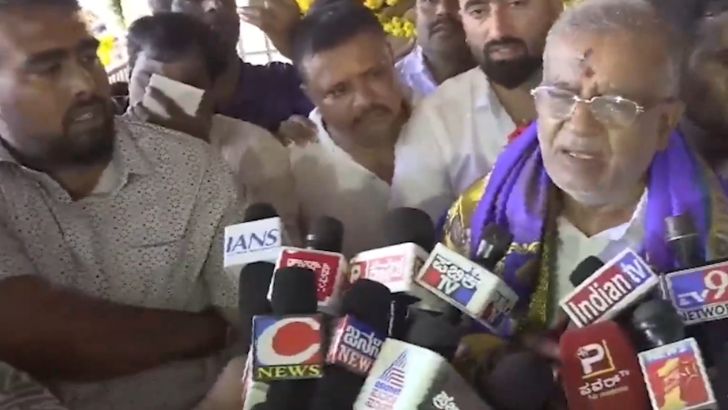
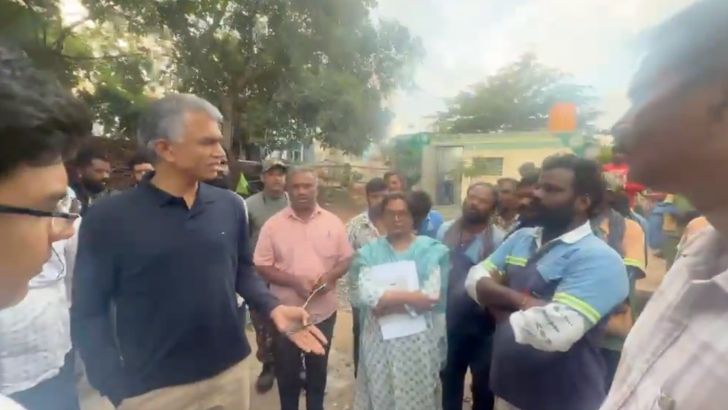
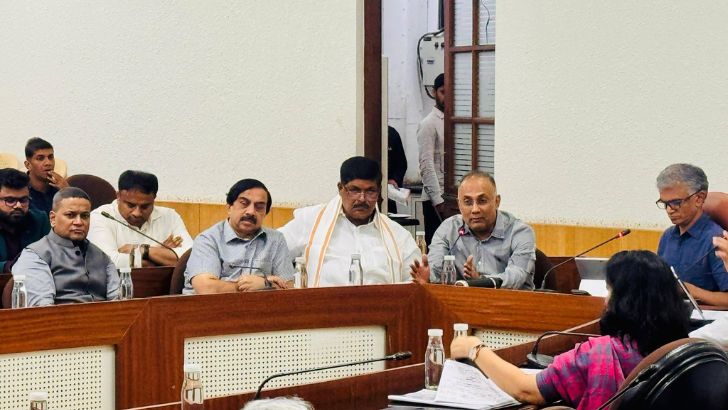
Karnataka Legislative Council Chairman Saleem Ahmed said every state should have an Upper House, even if it means additional expenditure, to provide checks and balances.
Salar News
.jpg)
-
The Council chairman said he plans to propose the creation of Legislative Councils in all states at the next meeting of Speakers and Chairpersons (Salar News)
Bengaluru, 6 September
Naheed Ataulla
Karnataka Legislative Council Chairman Saleem Ahmed's transition from a dynamic student leader, a Congress legislator and now to occupy one of the highest positions in the Constitution is a tale of struggle and patience. With the three-day special legislature session commencing from 21 September to discuss drought and the K Kasturirangan report on the Western Ghats, Ahmed speaks to Salar Upclose on his plans to ensure smooth proceedings in the House, after the recently concluded session that was marred by the opposition parties’ protests.
1. You recently expressed deep concern over the loss of precious time of the House due to continuous protests during the monsoon session. How do you plan to work with floor leaders to prevent stalemates and ensure meaningful debates in future?
The day I assumed office as the Council chairman, my duty was to run the House proceedings as per the rules and regulations of the Council's business and the Constitution. I appealed to the Bharatiya Janata Party (BJP) leaders to allow the proceeding as my first duty was to take up the question hour followed by zero hour and calling attention notices. But suddenly, the BJP members stood up and started shouting from their seats. I asked them to give notice on the issue, but they did not agree and instead demanded the resignation of minister B Nagendra (who has since resigned). They were adamant as they did not want the House to function.
I held meetings with the floor leaders and told them there were many issues such as drought which required to be debated. I also told them both Houses of the legislature have only 300 members to represent the seven crore population of Karnataka. I was pained that they did not participate even when the Bills were tabled for discussion. As a result, the House passed 15 to 16 Bills without discussion.
I have been a member of the Council for 17 years, but never have seen this kind of attitude by the opposition. I plan to call a floor leaders’ meeting before the session starts on 21 September and appeal to them for a smooth functioning.
2. The Legislative Council is meant to act as a House of elders providing sober second thought on bills. How can the House play an effective, advisory role in state policy-making?
In the last session, I had called the opposition leader Chalavadi Narayanaswamy, Janata Dal (Secular) floor leader Bhoje Gowda, BJP's CT Ravi and the ruling party leaders to my chambers, when the BJP raised the issue of deaths of three poachers in Chamarajanagar district without giving a notice. The opposition agreed to allow for the question hour, but once the House assembled they demanded the resignation of B Nagendra. I said this kind of double standards is not acceptable. I am sure the three-day session will run smoothly.
3. Critics have often questioned the necessity of an Upper House, labelling it a delaying mechanism for legislation and many states don't have an Upper House. What is your vision to make the Karnataka Legislative Council a more proactive advisory body?
I don't agree with their views because there should be a bicameral system like the Lok Sabha and Rajya Sabha. Presently, Karnataka, Uttar Pradesh, Bihar, Telangana, Andhra Pradesh and Maharashtra have the Upper House, which is required to maintain checks and balances. It's called the House of Elders because we have academicians and others, who otherwise cannot get elected.
The House needs their opinion, and what I mean by that is in the Assembly a different level of discussion takes place, and in the Council, members have their own ideas. I feel every state should have a Council even if it means extra expenditure. In the next meeting of Speakers and Chairpersons at the all India level, I will propose constituting Councils in all states.
4. The legislative Council was carved to bring independent intellectuals or experts, but political parties frequently use the Council to reward loyalists or accommodate candidates who lose Assembly or Lok Sabha elections.
I don't agree, there might be some stray cases. For example, former MLC Prakash K Rathod is a cricketer and a politician. If he is given an opportunity under the sports quota, what's wrong? Also, poet L Hanumanthaiah or playwright Chandrashekar Kambar (both former MLCs), are they not worth being appointed to the Legislative Council? Kambar is an excellent speaker, people like him should come to the House. Besides, the House has provision for political party members to be elected from the local bodies', graduates' and teachers' constituencies apart from the 11 who are nominated.
5.What initiatives are underway to digitise records and make council proceedings more accessible to the public?
I want people of Karnataka to know what happens in the House and how we conduct ourselves. During the last session the opposition parties were shouting slogans. I reminded them that there were students watching the proceedings from the visitors’ gallery and the House is not a public meeting to shout slogans.
The library will be improved.
I also want the members to read the rules for raising issues in the House. For example, an issue raised during the zero hour should not be more than 250 words and only three minutes are given, but some members come with two pages. Only five to six issues should be raised in the zero hour, but now what's happening is instead of the stipulated 30 minutes, it stretches to one and half hour. My predecessor Basavaraj Horatti used to allow 15 to 18 issues to be raised during the zero hour.
6. Maintaining decorum in the Legislative Council requires immense patience and energy. Many don't know that behind that strict demeanour, which the post demands, is a passionate singer.
When I was the Congress whip in 2005 and VR Sudarshan was the Council Chairman, we had plans to have a Legislators' Day. As Chairman, I have announced that in January after the Governor's address to both the Houses of the Legislature, a three-day Legislators' Day will be held. We can have cultural activities and sports where every member can display their talent. I want that the people of Karnataka should also know the talents the legislators have and that they are not just politicians. I hope Chief Minister DK Shivakumar will agree to the proposal. I am not a professional singer, but I will share some other time about whether I'm a lover of sports and about my singing.
7. How challenging was the transition for you from a senior Congress leader and Chief Whip into a strictly neutral arbiter trusted equally by both the ruling party and the opposition?
It's a hot seat. My political journey in the last 45 years has progressed from a student leader to block and district level head, a 15-year stint in New Delhi as general secretary of National Students Union of India and now this new role as a neutral person.
For one or two days, it was very difficult for me to adjust. I have been the chief whip in the Council thrice and I used to fight with the opposition parties if they did not behave properly. In my 17 years in the Council, not once have I sat in the Chairman's seat as a panel member, and this transition from chief whip to the Council Chairman was so sudden. In my new role, I may be a little close to the opposition parties as one has to give importance to them.
Share Now

Leave a Reply
Your email address will not be published. Required fields are marked *
Other Stories